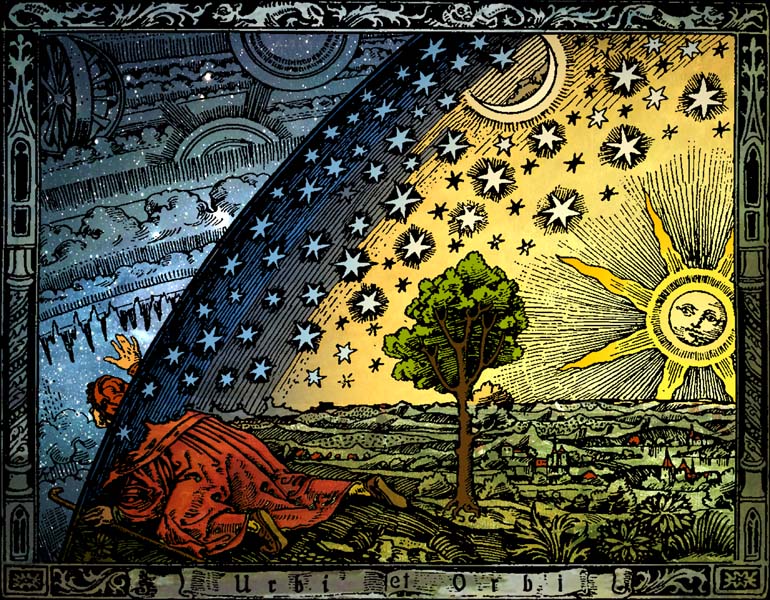
Above is a picture of a famous woodcutting, a visual representation of the aesthetic of the mathematician: seeing through everyday phenomena to the reality behind the scenes. For most people who have spent their lives studying mathematics, the driving force has been the pursuit of the feeling imagined above. This class is designed to let you, in a small way learn what it feels like to be a mathematician. Unlike a lot of other math classes, it is not about practicing a specific set of facts or procedures ad-nauseum. Instead it’s a chance to think. Through the episodes described in Journey Through Genius, you’ll encounter and prove some of the most insightful and important theorems in the history of mathematics.
Basic Description of the Course
We will study examples of the works of genius of about a dozen of the greatest mathematicians of all time ranging from early Greeks through Europeans of the twentieth century. We will look at these ideas systematically using our main text Journey Through Genius. In so doing, we will try to gain an appreciation of their work as we would try to appreciate Bach or Mozart by listening with great care to some of their works of genius. We will form six groups of students, three to a group, and each group will select two of our ten chapter subjects. The groups will present to the rest of us some of what they have learned in their chapter, principally they will prove the theorem that is the main focus in that chapter. We will have extended discussions on these presentations, and the other students will formulate questions to further discussion. In addition to our detailed mathematical work, we will look at some aspects of math as it intersects society, from novels to Youtube. To appreciate mathematics, it will be necessary to delve into proofs and algorithms, for they are the very stuff of mathematics. If you have always thought that mathematics and excruciating boredom were different names for the same thing, this seminar just might change your mind.
This course is being taught by Chris Holden and Bibiana Seng. More on us below.
Readings and Texts
Main Text
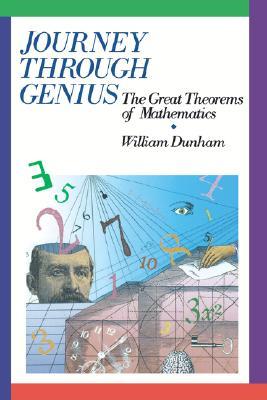
- Journey Through Genius by William Dunham
Supplemental Reading
- A Mathematician’s Lament by Paul Lockhart
- The Mathematical Experience by Philip Davis and Reuben Hersh
- The Crest of the Peacock by George Ghevarghese Joseph
- The Cult of Pythagoras by Antonio Martinez
Fictional Works Relating to Math
- Proof by David Auburn
- Wild Numbers by Philibert Schogt
- Uncle Petros and the Goldbach Conjecture by Apostolos Doxiadis
- The Curious Incident of the Dog in the Nighttime by Mark Haddon
- Logicomix by Apostolos Doxiadis
These readings and more can be found here.
Official Requirements
Below are the logistical details of participation. If you have any concerns or questions about these details, or if you require any form of accommodation to participate fully, it is my aim to make math and the mechanics of this classroom available to all. But I cannot read minds. Please do not hesitate to contact me directly so that I can make any necessary accommodations or adjustments. Please also make sure you understand how [grading][grading] works in this course.
- Two group presentations on material from a chapter of JTG. Each should include proving the main theorem that chapter and situating the biographical and historical context at greater depth than in the book.
- As a pair, lead a “Show and Tell”where you independently investigate and teach us about a topic not covered in the class.
- Three major homework assignments, here is a sample question.
- Preparedness and Participation, including active reading of the works we consider.
- Willingness to do math in public, and to create a safe environment for others.
- Willingness to learn new methods of production (posting to Slack, google docs, image editing, markdown, latex, etc.)
- Enthusiasm to eradicate C.P. Snow’s “Two Cultures”.
Further Responsibilities
It is your job this semester to take on the mantle of the mathematician, and to help your classmates to do the same. This may sound hard, weird, or just something you’re not cut out for. It may sound like a dream come true. One of the best things about this class is that usually we have people who come in with both of these perspectives and who learn to work on math together.
Being a mathematician in this class can be for everyone. You do not need specific skills, background, or experience in math to do well or be an important part of this class.
Really.
There are advantages to having done well on math in the past. Being asked to do a bit of algebra is less likely to make you break out in a cold sweat. Fractions might not make you dizzy. But as long as you’re willing to try, there is not an overwhelming amount of calculation to do here. There are no time limits, and nothing is closed book. When you get stumped, ask a neighbor for help, or me, or Google.
If you do happen to be a mathlete, some of the basics will be easier for you. But since we are going to be looking at math non-specialists don’t often see and even the common stuff we approach from a perspective atypical for math classes, this class has a lot of interesting challenges for you as well, not the least of which is learning goals that do not culminate in getting the right answer first.
All in all, becoming a mathematician for this class is like cooking an omelette: it is simple—there are not many ingredients or tools—but how it comes out depends strongly on those few things and how you do it. While experience and skills are minimally useful, a productive attitude is king. To sum it up, you will dearly need
- Curiosity– the desire to understand is paramount. This is a form of caring, mentioned more below.
- Patience/Persistence– Math is not about getting something right the first time, it’s about not giving up when answers are hard to come by.
- Active thinking– a little hard to describe, but reading with a pen and paper is a good sign. You cannot learn math without doing it.
The other requirement is not one mathematicians are known for, but is absolutely essential:
Communication – Though the ‘aha’ moment is a personal one, this class is a joint quest. Individual progress is not enough. How and why are more than means to getting full credit.
About your teachers

Chris Holden an associate professor here in Honors. Even though his research is no longer in mathematics, his PhD is in mathematics, number theory to be more specific. His dissertation is titled “Mod 4 Galois Representations and Elliptic Curves” to be way too specific. In it, he proved new theorems in the field of algebraic number theory.
He started down this path long ago. Though he was always good enough at math tests, real interest in the subject began as an undergrad at UNM. He took a number of math classes from a professor who taught me to see math as beauty. He also took this very course from Frank Kelly. That was 1997. It was his first chance to teach math. It was interesting and infectious. Frank did more too. He began showing Chris math books that were worth reading (not those giant, pointless textbooks) and helping him work through the problems. Though Chris never took another math class from Frank, he was singularly influential in Chris deciding and being able to attend grad school.
Because this class and Honors were so important then, Chris takes his responsibility as a teacher of this course very seriously.
For more and office hour listings, go here.

Bibiana Seng is a super senior (5thyear) student in her final semester at UNM, wrapping up her degrees in Applied Mathematics and Statistics. She’s currently working on 2 research projects: one on comparing clustering methods for surface level (a priori) analyses of genomic data, and another on predicting offshore extreme wave heights.
She first started undergrad in 2014 as a Chemical Engineering major because of her love of chemistry, but upon taking Calculus 1 decided to switch to Mathematics as a field of study. She took a lot of the required classes and learned a lot, but didn’t really know what exactly to pursue until, on a whim, she took a Statistics class with her friends. From there (plus the advice of her advisors and mentors), she decided she wanted to pursue a Ph.D. in Statistics. Outside of her STEM background, she’s fond of writing and plays a ton of video games; in fact, her first class with Chris was his Local Games in Albuquerque class back in 2016.
Both Honors and mathematics have been important to Bibiana ever since the beginning, and she is excited to do her best in being a student teacher!
Morals of Our Story
What’s below is not part of the usual viscera of a syllabus. But just as the point of this course is to unveil some of the context that is always missing from math classes, the context of the subject, why it is what it is, the sections below do a bit to establish context about what math really is and your roles in this course.
Who Cares?
One of the things that can be hard about trying to get into these big theorems, something that is hard in every math class but is usually ignored, is the problem of “who cares”. This doesn’t seem like a big deal at first, but it silently grows on a person. Say you’re reading the book, and it’s all going well until there’s a bunch of equations or something, and your eyes just sort of glaze over. Most times you keep reading along. The words are going into your brain, but only sort of. Once it gets to be a little confusing or boring then you stop really trying to figure out what’s going on, you just keep reading because you’re supposed to finish. And more likely than not, there’s more to read for other classes.
But here’s the not so big secret: reading math is different than reading a novel. The way that your brain creates meaning out of letters and symbols is simply not the same as with literature. There aren’t plot points to pick up as you skim along, and in fact, it’s not intended to be read linearly, once through from beginning to end. The point of reading written math is to put your brain in a situation where it is trying to figure out what’s going on. That situation or feeling isn’t itself on the page. It’s between the lines. You can help it along by reading with pen and paper in hand and actually writing something down.
This doesn’t happen automatically, not even for me. You have to stop yourself and go back. You have to care enough to say, “No, I really need to see how this works out.”
If you’re not really reading, if you don’t actively care, then there’s really no point. It’s not math.
One of the ways people have tried to solve the “who cares” problem in writing math books is to embed the problems, equations, etc. in their original historical context. Journey Through Genius is very much written along these lines. In addition to focusing on a big theorem, each chapter focuses on the life of a particular person or group of people and the situation in which this theorem arose. And this can be a lot of fun.
But even though this author is trying very hard, we won’t succeed if we simply hope he will make us smart with his words. Just like with the equations, the historical or social situation isn’t helpful or important on its own. It serves to put us in the moment, to give us a way to care about what’s going on.
We are responsible for the actual caring.
Getting better at difficult things
One of the greatest mistakes to make is to suppose that because something is hard for you today that it will always be that way. Whether it is doing math, presenting it, discussing it, or reading it—these activities have been chosen for their importance and their likelihood of not being practiced—the whole idea is that they might feel uncomfortable at first, but that after 16 weeks together, supporting this journey, they will become easier, maybe even like a strength. I hope this course provides us all, me included, opportunities to improve.
A big part of this process is having a healthier attitude towards failure. Whether it is the math problems we do, or how to more fully develop the context surrounding a historical development, if we expect these things to be difficult, then we should also plan for failure. Anything that we do, we do at least twice. Expectations are not set for how you handle everything on your first time through, but on how you learn. Feedback and reflection are the ingredients needed to make a better effort in the future. And likely some of what we try will need to be worked on at a greater wavelength than 16 weeks. There very well may be a lesson to learn, where—here—you only see the first cycle of failure. Making good on it happens down the road somewhere. This course is not the beginning or the end.
Names in Math
Maybe one of the funny things you’ll start to find out about math this semester is the unusual way naming takes place and reflects reality in this discipline. Here’s an example from the highest literature I know, Calvin and Hobbes:
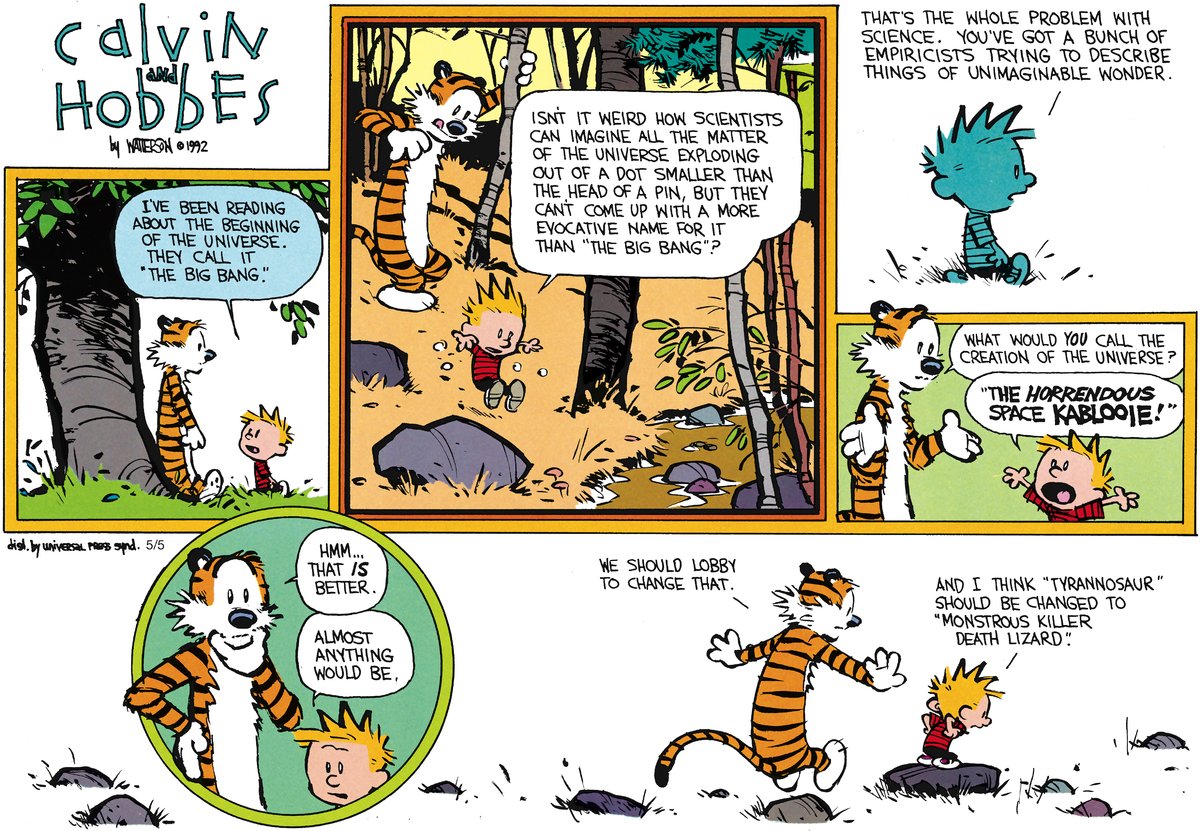
Mathematicians do have a way of underwhelming you with their naming schemes. I have books with titles like “Introduction to Arithmetic”, “Algebra”, or even with the nickname as “baby analysis”. The first would make you cry if you saw it, the second took me years to really read, and the third is so complicated, most undergrad pure math majors only get the slightest understanding of it.
There’s also a lot of things in math that are named after people. Odds are about 50–50 that the name is for the person who invented/discovered that thing. Truth is, if we named everything after who deserved credit, something like 80 percent of all math would be named after Euler. He has two chapters in our book.
On the other hand, some names in math are more fitting than you probably know. For example, square numbers can be configured into a … you guessed it… square.

And hopefully this semester you’ll learn the picture behind the phrase “difference of squares”.
Doing Math
Even the phrase “doing math” is loaded in interesting ways. To you it probably means something very different than the professors from whom you’ve taken math courses in college. Many of them would probably say a student doesn’t begin to “do math” until they have left calculus. One of the aims of this course is to give you a chance to do math like a mathematician instead of like a student in a math class. At the center of this is the activity of proving theorems. We’re going to look at really just a small handful of cases, incredibly important historical moments, where a theorem is proven, and try to recreate that.
Before I try to convince you that this is really going to be great for us to do, it would be helpful to wonder what theorems are and why they’re so central to how mathematicians see their work. So what is a theorem? What else do we need to understand to make sense of this vocabulary word? And how does this tell us about the central role proving theorems has for mathematicians?
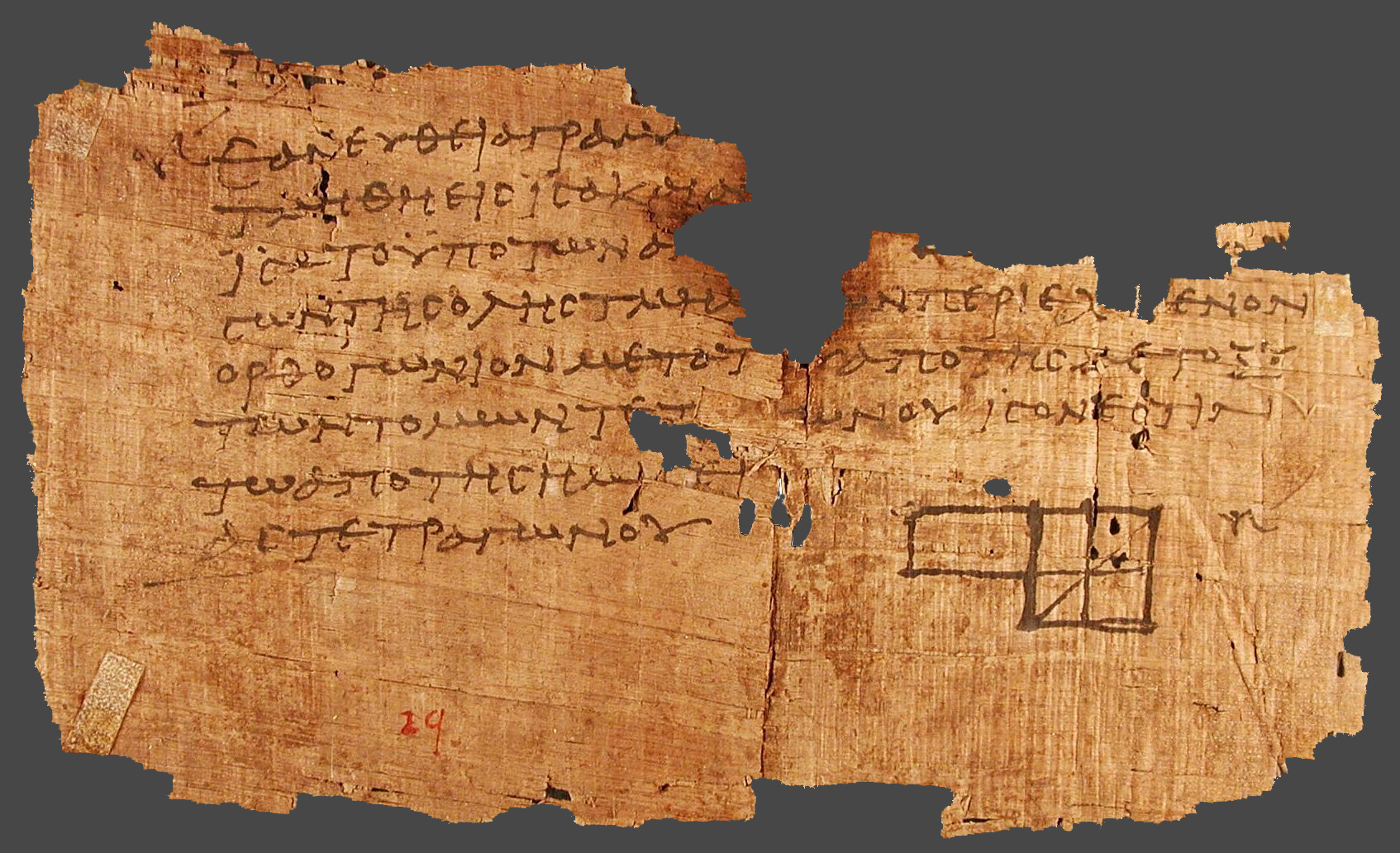
If you’re ready to get started, crack open JTG or read a short post Introduction to demonstrative mathematics
How to solve math problems
There is no step-by-step plan. In school we like to pretend there is. This is achieved by so narrowly limiting the scope of inquiry that it is almost impossible to address anything of interest or real importance. Those who are good at it succeed not by knowing the answer right away but by becoming comfortable with the frustration of not knowing. You see a brick wall before you and instead of hitting it with your fists in anger, continually search for a way around. If you want to become a person who does this professionally, there is no substitute for developing your capacity of frustration. Many creative disciplines apply here, and maybe this is how to convince you that subjects we don’t normally think of as “creative” are, mathematicians and physicists especially.
You don’t usually know what the correct approach is going to be. Instead you try something you know that feels at least barely plausible. And you pay enough attention to how it’s going that you either begin to smell success, realize you’re heading down a dead end and start over somewhere else, or maybe find another idea amidst your failure.
In this class, I only ask that you suffer a bit. Try the problems yourself. Be comfortable with being stumped, and trying something that goes nowhere. Being able to recognize a failed approach is much more valuable than you likely believe. One of the main regrets I’ve heard from students is not giving themselves a chance to try before looking up solutions.
But at the same time, don’t let this frustration send you into despair. You are not alone in this. You have your teachers, classmates, and all of humanity to look to for help before giving up. I recommend tapping personal sources before the internet though. Why? Two birds, one stone. When you ask one of us, you strengthen that relationship and your own muscles when it comes to working as a part of a team. There is a chance for discourse too, to see if you’re actually getting somewhere and not just copy-pasting alphabet soup. You also show the other person that it’s okay forth to ask questions.
Create equations from what you know. At least half of the problems in JTG come down to some version of creating an equation along the lines of whole = sum of parts, and equation you make by noticing that there are two ways to look at the same thing.
